The thoughtful sleeper’s guide
A Buyer’s Checklist for Organic Sleep Surfaces
An organic mattress is not a single material or a magic phrase. It is a layered construction, a set of sourcing and processing claims, and a practical choice you will live with night after night. Here is how to look beneath the label—with a clear eye for materials, certifications, comfort, care, and the details that deserve a second question.
Shopping for an organic sleep surface can feel like entering a room full of beautifully composed claims. Natural. Pure. Conscious. Clean. Each word has its own appeal, but none, on its own, tells you exactly what is inside a mattress or how a particular material was grown, processed, tested, or assembled. The useful work begins with the layers.
A mattress is a system: cover, quilting, comfort layers, support core, adhesives or joining methods, and sometimes a fire barrier. A product might use organic cotton in its cover, certified latex in its core, and other materials elsewhere. That can still be a considered construction—but it is not the same claim as a mattress made entirely from certified organic components. To compare options fairly, ask what the word “organic” refers to, and where it applies.
This checklist is designed to make that examination calmer and more consistent. It is not a promise that one material suits every sleeper, nor a substitute for checking current certification documents. Rather, it offers a way to move past atmosphere and into particulars: which layer is which, what a label actually verifies, whether the build suits your body and preferences, and what care the surface will ask of you.
1. Begin with the complete material picture
Before comparing firmness or reading a sustainability statement, look for a component-by-component description. The most helpful disclosures identify the cover fabric, quilting or batting, comfort layers, support core, and fire barrier. They also explain blends. “Cotton cover,” for example, may describe the outer fabric but not the filling beneath it; “natural latex” does not by itself say whether the latex is certified organic, what process was used, or whether other foams appear elsewhere in the construction.
Ask the seller or manufacturer to clarify any layer that is described only with broad terms such as “eco foam,” “plant-based,” “natural,” or “green.” These expressions can refer to very different things. A material may contain a portion of plant-derived feedstock while still being a manufactured foam; a natural fiber may be blended with synthetic fibers; and a product can have a natural surface layer while using a different support material underneath.
A useful disclosure should let you answer the following without guesswork:
- What is each layer made from, from the outer cover to the deepest support core?
- Where do blended materials appear, and what are the stated proportions?
- Are adhesives, coatings, or other treatments used in assembly or finishing?
- What material serves as the fire barrier, and what documentation supports the claim?
- Which components are certified, and which are not covered by a certification?
If a brand cannot provide every detail, that does not automatically settle the question of quality. It does, however, limit your ability to verify the claims. Transparency is part of the product information, not an ornamental extra.
2. Read certifications by scope, not by name alone
Certifications are valuable because they establish defined criteria and independent checks. They are not interchangeable, and a certificate for one ingredient does not automatically certify the entire finished mattress. When a label appears, find out which material it covers, what standard is being applied, and whether the certification is current.
For organic textiles, look for documentation that identifies the certified fiber and the scope of the claim. For latex, ask whether the certification covers the rubber’s organic agricultural origin, its processing, or both. A certificate may apply to a specific layer or supplier rather than every component in the finished sleep surface. The distinction matters: “contains certified organic latex” is a narrower statement than “the entire mattress is certified organic.”
Some familiar marks address different questions altogether. CertiPUR-US, for instance, is associated with testing and requirements for certain polyurethane foam products; it is not a certification that a foam is organic. OEKO-TEX® standards concern testing of textiles and other products for specified substances, while GREENGUARD Gold focuses on chemical emissions and indoor air quality criteria. These may be useful signals, but none should be casually treated as proof of organic agricultural sourcing.
Make a simple record as you compare: certification name, certifying organization, covered component, standard or scope, and the document or certificate number where available. Then verify details through the certifier’s own materials or directory when possible. A logo in a brochure can start the inquiry; it should not be the final answer.
Keep the questions distinct: Is this material organic? Has this product been tested against particular chemical or emissions criteria? Is the finished mattress certified as a whole? These are related consumer concerns, but they are not the same claim.
3. Understand the materials you are considering
Natural materials are not automatically identical in feel, durability, or care. Their performance depends on processing, density, construction, and how the layers work together. The right material is the one whose documented properties and comfort profile suit your needs—not simply the one with the most romantic description.
Cotton
Cotton is commonly used in covers and quilted layers. It can feel familiar and breathable, but the word alone does not indicate whether the fiber is organic, how it was processed, or whether it is blended. Check the composition and certification for the specific textile. Also ask about the care instructions: a mattress cover may not be removable or machine washable, even if it is made from cotton.
Wool
Wool may appear in quilting or as a fire barrier. It is valued for its springy texture and ability to interact with moisture and temperature, but its presence does not establish that the whole product is organic. Confirm the wool’s sourcing and certification, the layer in which it is used, and whether the manufacturer recommends spot cleaning, professional cleaning, or another method. Never assume that a natural fill can be washed at home.
Latex
Latex is a broad category, not a complete sourcing statement. Ask whether the material is Dunlop or Talalay, whether it is natural, blended, or synthetic, and what any organic certification covers. The two common manufacturing approaches can produce different structures and feels, but the word “organic” depends on verified sourcing and processing rather than on the name of the method alone. Latex mattresses may also be built in layers, making configuration and layer order important comfort details.
Springs and other support components
A mattress with natural fibers in its comfort layers may use a metal spring support core. That is not a contradiction; it is a different component with a different function. Examine the whole build rather than treating one natural element as a summary of the mattress. Support systems, edge construction, joining materials, and the way comfort layers are secured all influence how the sleep surface behaves over time.
4. Match construction to comfort—not to a label
Organic describes sourcing or standards; it does not describe firmness. A certified material will not, on its own, tell you whether a mattress will feel soft, medium, or firm, or whether it will work well for a particular body or sleeping position. Comfort is personal and affected by body shape, preferred posture, temperature, movement, and the foundation beneath the bed.
Think about the sensations you want the mattress to provide. Do you prefer to settle into the surface, or to feel lifted and more buoyant? Do you share a bed with someone who moves differently or has different firmness preferences? Are there pressure points that make a surface feel uncomfortable after an hour rather than at first touch? These are more useful starting points than relying on a generic firmness number, since firmness scales are not perfectly standardized across manufacturers.
When possible, review the retailer’s sleep trial, return terms, delivery and setup arrangements, and any layer-exchange policy before buying. Understand whether the mattress is designed for use on an adjustable base, a slatted foundation, a platform, or another support system. A mattress can feel different on an unsuitable base, and an unsupported foundation may affect both performance and warranty coverage.
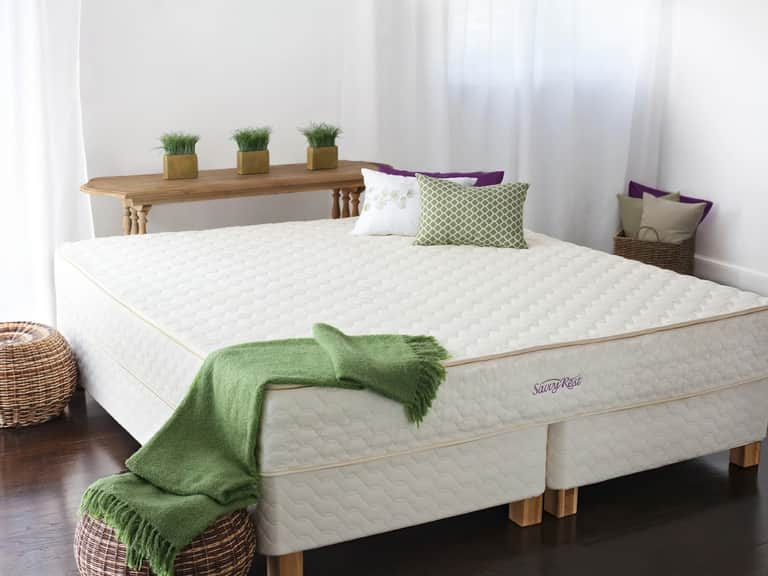
A configurable latex design illustrates why construction deserves close attention. The Savvy Rest Serenity Latex Mattress is described as having three customizable layers of soft, medium, or firm Dunlop and/or Talalay latex, with an organic cotton casing and organic wool quilting. Its product information identifies organic certifications for its latex and describes the available configurations; those claims apply to the components specified, so shoppers should review the current documentation and configuration details directly. In Queen and King sizes, the listed information also describes the option to customize each side. This is an example of why the layer recipe, certification scope, and comfort choices belong in the same conversation.
5. Inspect the fine print on labels and marketing
Product language often compresses a complex supply chain into a short phrase. “Organic mattress” may be used informally even when only selected components are certified. “Chemical-free” is especially imprecise: all physical materials are made of chemicals, and the phrase does not identify a test, threshold, or standard. Prefer statements that name the actual material and the evidence behind the claim.
Watch for descriptions that place a certification logo near a broad claim without saying what the logo covers. Look for a product specification, certificate, or standard reference that connects the mark to a named component. If a seller says a mattress is “made with organic materials,” ask how many layers are included and whether the phrase refers to a certified share of the product or simply to the use of one certified ingredient.
Also distinguish certification from warranty and performance claims. A long warranty does not verify organic sourcing; a “hypoallergenic” phrase does not tell you whether a product has been tested for a defined allergen; and a natural material does not guarantee that every sleeper will be comfortable. Each claim requires its own evidence and should be considered on its own terms.
6. Make maintenance part of the purchase decision
A sleep surface is a long-term household object, and its care instructions should fit the way you live. Check whether the cover is removable, whether it can be washed, and which cleaning methods are permitted. Many mattress covers are not designed for laundering, even when their fibers are natural. Removing or washing a cover without authorization can damage the construction or affect warranty coverage.
Ask whether the mattress should be rotated, turned, or left in a fixed orientation. Some models are designed with a specific top and bottom; others may be flippable. The manufacturer’s instructions take precedence over general advice. Use a protector that fits securely and is compatible with the mattress’s materials and temperature feel, especially if preserving the cover is a priority.
Consider delivery and setup, too. Natural latex mattresses can be substantial, and layered designs may require assembly or careful arrangement. Confirm dimensions, access through doorways and stairwells, the weight of the mattress, and the availability of professional setup. If a product has a layer-exchange program, read the time limit, fees, and eligibility conditions rather than assuming every configuration can be changed without cost.
7. Use a consistent comparison checklist
When a shortlist begins to blur together, record the same details for every option. A small comparison sheet can prevent a polished description or a single certification badge from overshadowing the practical differences.
- Full material disclosure: Cover, quilting, comfort layers, support core, barrier, blends, and joining methods.
- Certification scope: Name of the standard, component covered, issuing organization, and current documentation.
- Construction: Layer count and order, mattress height, support system, and whether it is customizable.
- Comfort: Available firmness choices, how the feel is described, and whether each side can differ.
- Fit: Compatibility with your foundation, bed frame, adjustable base, and room dimensions.
- Care: Cleaning method, rotation guidance, protector recommendations, and whether the cover is removable.
- Policies: Trial or return terms, warranty exclusions, delivery, setup, and any exchange fees.
- Unanswered questions: Anything the seller cannot verify or explain clearly.
Giving each mattress the same questions creates a more balanced comparison. If two products both use certified organic latex, for example, you can then consider layer configuration, comfort, return terms, care, and price without confusing shared material claims with overall equivalence.
A final checklist before you choose
Before placing an order, pause over these essentials:
- I know what “organic” refers to in this specific mattress.
- I can identify the main materials in every layer and understand any blends.
- I have checked which components each certification covers.
- I have separated organic sourcing claims from emissions or chemical-testing claims.
- The construction and firmness options make sense for my comfort preferences.
- The mattress works with my foundation and fits my room and access route.
- I understand cleaning, rotation, and protector guidance.
- I have reviewed trial, return, warranty, delivery, and exchange terms.
- I have written down any remaining questions and received clear answers.
The most considered choice is rarely the one with the most elaborate language. It is the one whose composition can be understood, whose claims can be checked, and whose construction fits the sleeper who will use it. Organic materials may be a meaningful priority, but they are one part of a larger decision that includes comfort, support, care, and transparency.
Approach the search as an editor would: keep what is specific, question what is vague, and let the details reveal the character of the whole. With a clear view of the layers and standards, an organic sleep surface becomes less a label to trust on faith and more a considered choice you can make with confidence.